
Beyond Lisbon: 10 Day Trips That Prove Portugal Is Unfairly Beautiful
Beyond Lisbon: 10 Day Trips That Prove Portugal Is Unfairly Beautiful
Lisbon is the kind of city that makes you cancel your plans to leave. But here’s the thing — what’s within an hour of Lisbon might be even more ridiculous. Fairy-tale palaces swallowed by fog. Fishing villages where the houses are painted the color of hard candy. Beaches tucked between cliffs that look like they belong in Southeast Asia, except the water is the Atlantic and the lunch is grilled sea bass with a cold Sagres.
These ten day trips are all doable from Lisbon — most under an hour by car, some reachable by train. Each one is a completely different version of Portugal.
The Icons
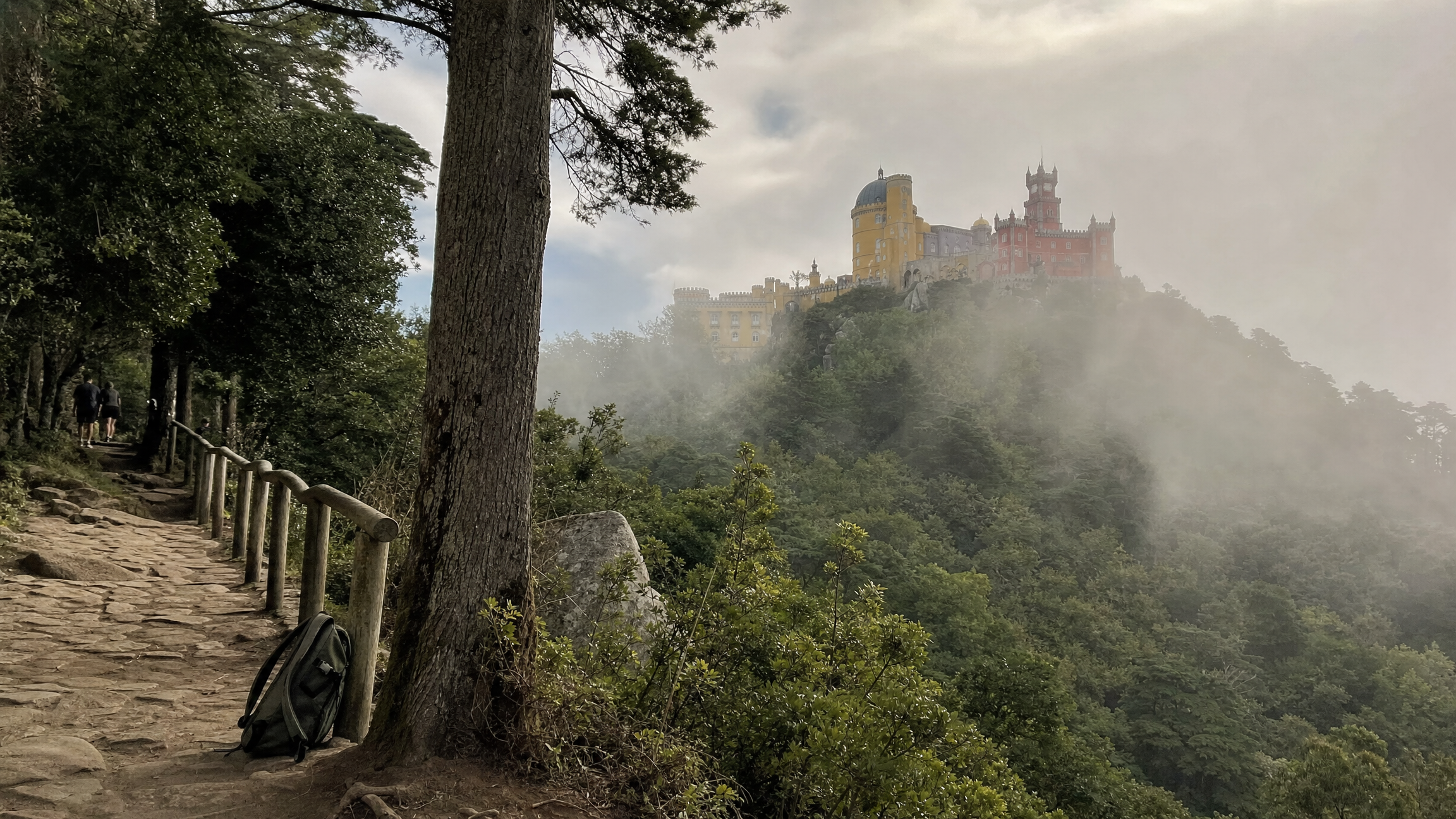
1. Sintra — You already know about Sintra, but knowing about it and standing inside the Pena Palace courtyard while clouds roll through the arches at eye level are two different things. This hilltop town in the Serra de Sintra mountains is what happens when 19th-century royalty had unlimited budgets and a weakness for Romanticism. Pena Palace is the headliner — a fever dream of yellow towers, red walls, and Moorish tilework — but the palace and gardens of Queluz National Palace, the eerie initiation well at Quinta da Regaleira, and the National Palace in the town center are just as worth your time. Go early. By noon the narrow streets are shoulder-to-shoulder. The travesseiros from Piriquita bakery are mandatory.
2. Cascais — Twenty minutes on the train from Cais do Sodré and you’re in a former royal resort town with a marina, surf beaches, and some of the best seafood within striking distance of the capital. The historic center is compact and walkable — pastel buildings, cobblestone squares, gelato shops next to century-old tascas. Walk west along the coast to Boca do Inferno, where the Atlantic punches through a sea cave with enough force to soak anyone standing too close. The beach at Praia do Guincho, fifteen minutes further, is one of Europe’s best surf spots. Cascais works as a half-day or a full one — depends on how long lunch takes.
3. Arrábida Natural Park — This is the one that makes people’s jaws drop. The Serra da Arrábida rises sharply from the coast south of Lisbon, and the beaches hidden beneath the cliffs — Praia de Galapinhos, Praia da Figueirinha, Praia de Creiro — have turquoise water so clear it’s almost insulting. The drive along the N379 ridge road offers views that don’t look like they belong in Portugal. Galapinhos was voted the best beach in Europe, and when you get there you’ll understand why nobody argued. Pack a picnic — the parking fills up and the walk down is steep. Worth every step.
History and Character
4. Óbidos — A medieval walled town about an hour north that looks like it was built as a film set and then someone accidentally left people living in it. The whitewashed walls, blue-and-yellow trim, and bougainvillea cascading over doorways are absurdly photogenic. Walk the town walls for views of the surrounding countryside, then duck into a bar for ginjinha — sour cherry liqueur served in a chocolate cup. Óbidos hosts a famous medieval fair in summer and a chocolate festival in spring. The town is small — two hours covers it — so pair it with Nazaré or Batalha.
5. Évora — A UNESCO World Heritage city in the Alentejo, about ninety minutes east. Roman temple, Gothic cathedral, a chapel whose walls are literally made of human bones (the Capela dos Ossos — look it up). Évora moves at a different speed than Lisbon. Long lunches. Afternoon wine. Cork oak trees stretching to the horizon. The food here is Alentejo cooking at its best — migas, açorda, black pork, sheep’s cheese. This one needs a full day, and you’ll wish you had two.
6. Mafra — The National Palace of Mafra is one of the largest Baroque buildings in Europe, and it sits in a town that most tourists skip entirely. The library alone — 36,000 volumes in a hall that seems to stretch into infinity — is worth the drive. João Saramago set an entire novel here. The town itself is quiet, unpretentious, and about forty minutes from Lisbon. Pair it with Ericeira for a coast-and-culture combo.
Coast and Nature
7. Ericeira — Europe’s only World Surfing Reserve, and it looks nothing like what you’d expect from a surf town. Ericeira is a traditional fishing village — whitewashed houses, blue trim, narrow streets — that happens to have world-class waves breaking offshore. Even if you don’t surf, the seafood restaurants perched on the cliffs above the beaches are reason enough. Try ouriços (sea urchin) if you’re feeling brave. Forty-five minutes from Lisbon.
8. Setúbal — On the south bank of the Sado estuary, Setúbal is a working port city with a fish market that would make a chef weep. The choco frito — fried cuttlefish — is the local obsession, and after one plate you’ll join the cult. From Setúbal you can take a ferry across to Tróia, a sandy peninsula with beaches that go on for kilometers, or spot bottlenose dolphins in the estuary. Less polished than Cascais, more interesting because of it.
9. Sesimbra — A fishing village wedged between the Arrábida hills and the Atlantic. The castle above town dates to the Moorish period and has panoramic views that are genuinely hard to believe. The beach is right in the center of the village, the fish restaurants line the waterfront, and the whole place feels like it hasn’t changed much since your grandparents were young. From Sesimbra you can drive to Cabo Espichel — a windswept cape with a crumbling monastery and dinosaur footprints pressed into the cliff face. Yes, actual dinosaur footprints.
10. Nazaré — Famous for the biggest waves on Earth — the ones that break at Praia do Norte, where surfers become tiny specks on walls of water that reach 80 feet. Even outside big-wave season, Nazaré is a fascinating place. The old town sits below a cliff, the Sitio neighborhood perches on top (take the funicular), and the beach stretches wide and golden. The local women still wear traditional seven-skirt outfits on festival days. About ninety minutes from Lisbon, and pairs perfectly with Óbidos on the way back.
How to Do It
Sintra is easy by public transport — the train from Lisbon runs regularly. Cascais is also a quick train ride from Cais do Sodré. Everything else is better with a car or a private tour, especially Arrábida (no public transit to the best beaches) and Évora (trains run but the schedule is limited). Start early, bring layers — the coast can be surprisingly windy even in summer — and don’t skip lunch. Half the point of a Portuguese day trip is the food.
Go Deeper
Our Sintra Half-Day Tour covers the highlights of Sintra with a private driver and guide — no navigating mountain roads or fighting for parking. The Sintra Full-Day Tour goes deeper into the palaces, gardens, and hidden corners that most visitors never find. For the coastline — Cascais, Cabo da Roca, and Guincho Beach — our End of the World Tour covers all the coastal sights in a single full-day excursion, without the inefficient detour through the Sintra mountains. And our Best of Belém Tour explores the Age of Discovery neighborhood — a far richer pairing with a Sintra half-day than a rushed drive to Cascais.
Lisbon is unforgettable. What surrounds it might be even better.


Comments
Post a Comment