
Lisbon's Living Canvas: 10 Azulejo Facades That Turn Every Street Into a Gallery
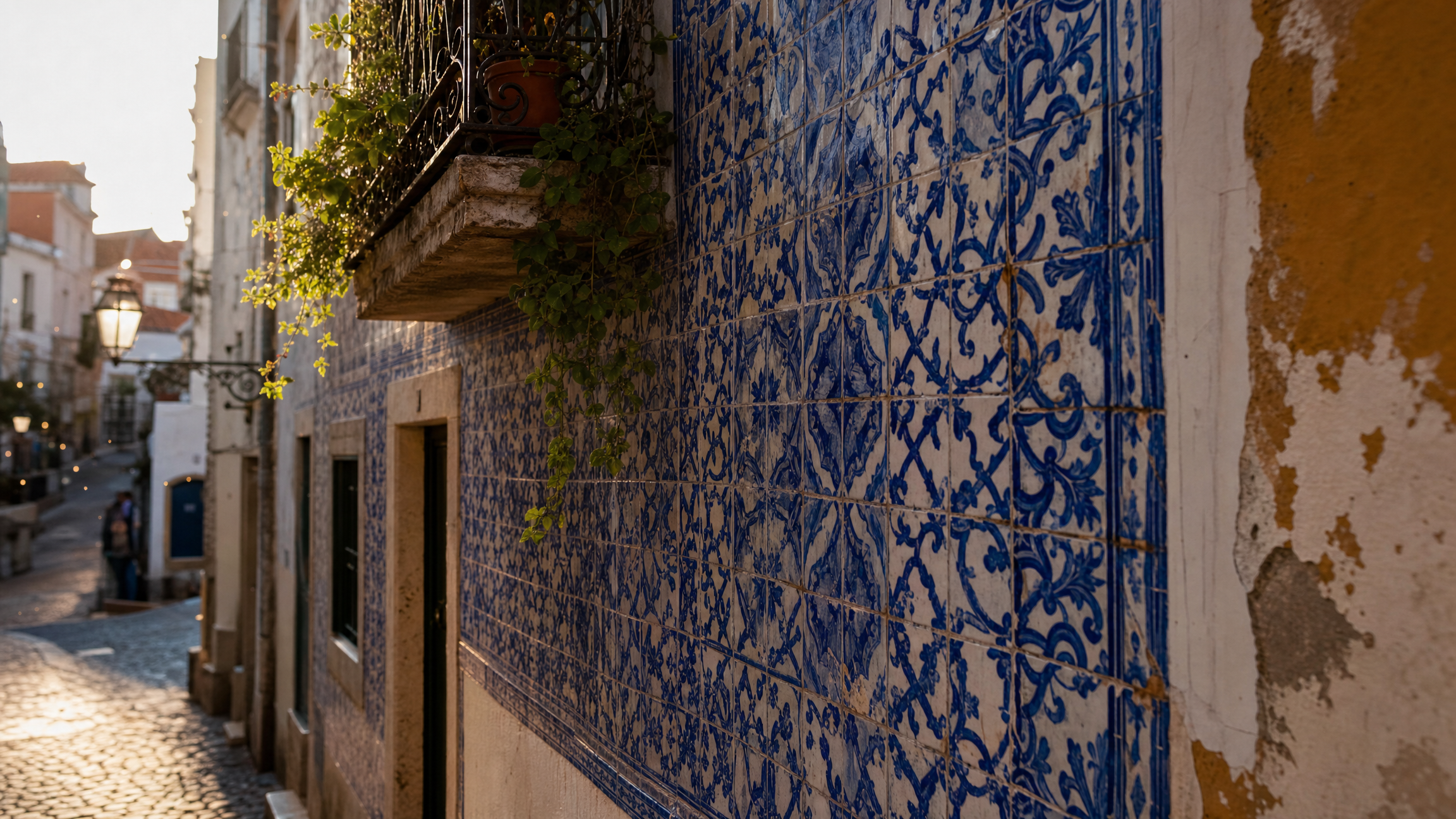
Most cities hang their art in museums. Lisbon plasters it across the walls of churches, train stations, apartment buildings, and corner bakeries — then lets the Atlantic rain and four hundred years of sun do the varnishing.
Azulejos — those hand-painted ceramic tiles you'll see on practically every surface in Lisbon — aren't just decoration. They're the city's autobiography, written in cobalt blue and terracotta. Moorish geometric patterns from the 1500s. Baroque battle scenes stretching across entire church interiors. Art Nouveau florals wrapping the facades of Intendente apartment blocks. And yes, the occasional modern mural that proves this tradition is still very much alive.
Here are ten facades that'll stop you mid-step and make your camera work overtime.
The Historic Masterpieces
Igreja de São Vicente de Fora in Alfama is the heavyweight champion. Step inside the cloisters and you're surrounded by 38 panels of blue-and-white tiles illustrating the fables of La Fontaine — foxes, crows, and all. The monastery roof terrace gives you a panorama of Alfama's terracotta rooftops as a bonus. Get there early, before the tour groups arrive around 11am.
Igreja de Santa Engrácia (the National Pantheon) took 284 years to finish — Lisboetas still use obras de Santa Engrácia as slang for anything that takes forever. The tile work in the surrounding Campo de Santa Clara neighborhood tells the story of why: centuries of ambition, funding crises, and stubborn devotion, all glazed in blue.
Frontaria Azulejar in Alfama is one of the newest additions to the tile trail. Contemporary artist Add Fuel transformed a plain building facade into a massive geometric tile mural that blends traditional patterns with modern street art sensibility. It's the kind of thing that makes you stare for ten minutes trying to figure out where the old ends and the new begins.
The Neighborhood Gems
Rua de São Miguel in Alfama is a narrow lane where nearly every building wears its tiles like Sunday clothes. Faded greens, deep blues, ochre yellows — no two buildings match, and that's exactly the point. Photograph it in late afternoon, when the sun drops low enough to light up one wall at a time.
Largo do Intendente was Lisbon's roughest square a decade ago. Now it's one of the most photographed, thanks to the Viuva Lamego tile factory building — a working ceramics house since 1849 whose facade is basically its own showroom. The blue-and-white frontage practically glows at golden hour.
Rua da Junqueira in Alcântara is a street most visitors blow past on the tram to Belém. That's a mistake. The residential buildings here wear some of Lisbon's finest Art Nouveau tile facades — ornate floral patterns in soft greens and pinks that look like something out of a Mucha poster.
The Unexpected Discoveries
Mercado de Campo de Ourique might be a food hall now, but the exterior still carries original 19th-century tile panels showing agricultural scenes — farmers, fishermen, and harvest tableaux. Grab a bifana (pork sandwich) inside, then walk the perimeter to spot them.
Rua da Madalena in Baixa is where Lisbon's tile obsession hits maximum density. Nearly every building on this steep street from Rossio to the cathedral is covered in azulejos — geometric patterns, solid colors, hand-painted scenes. It's basically a vertical tile museum you can walk through.
Largo Rafael Bordalo Pinheiro in Chiado hides a gem on the facade of the building named after Portugal's most famous caricaturist. The decorative tiles here mix traditional craft with satirical edge — fitting for an artist who spent his career poking fun at Portuguese society.
Sintra Train Station is a quick side trip that rewards tile hunters generously. The station walls are lined with massive painted panels showing scenes from Sintra's fairy-tale landscape — castles, forests, and the misty Serra. You'll see them before you even leave the platform.
How to Photograph Azulejos Like a Local
Pro tip: overcast days are actually better for tile photography than bright sun. The diffused light brings out the depth of the glaze without harsh reflections. And don't just shoot the whole facade — get close. The beauty of azulejos is in the details: the slight irregularity of hand-painted lines, the way centuries of weather have given each tile its own personality.
Go Deeper
These facades are scattered across the city, but several of our tours walk you right past the best ones with a guide who knows the stories behind the tiles. Our Hidden Lisbon Walking Tour cuts through Mouraria and Alfama, where tile-covered walls are around every corner. And our Around Alfama Tour takes you deep into the neighborhood where azulejo culture began.
Bring a good camera. Your phone's storage is about to get a serious workout.


Comments
Post a Comment