
From Tourist Trail to Back Alleys: 10 Fado Houses That'll Give You Chills
From Tourist Trail to Back Alleys: 10 Fado Houses That'll Give You Chills
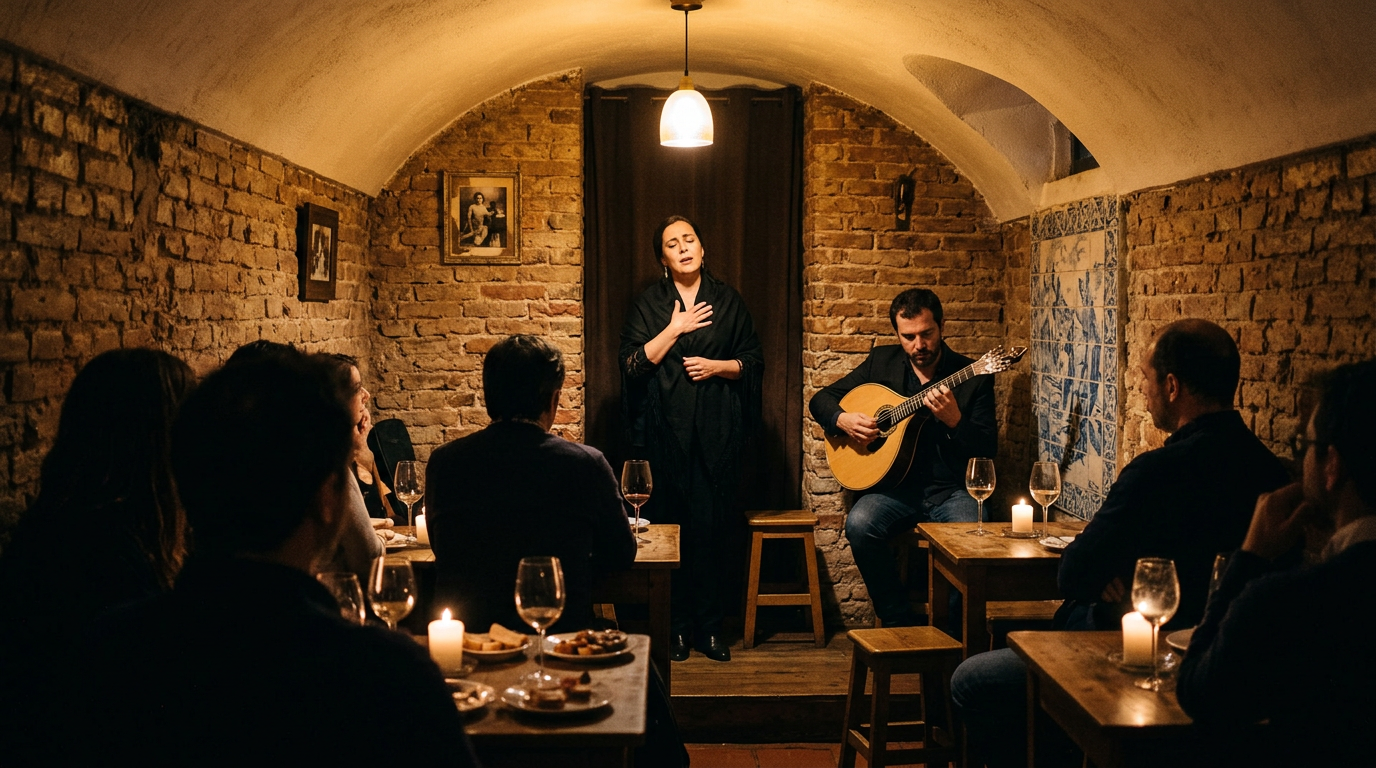
Fado isn't background music. It's Lisbon's soul, sung raw. The Portuguese call the feeling saudade — a longing for something you can't name, a homesickness for a place you've never left. You don't just hear Fado. You feel it in your chest, somewhere between your ribs and your memories.
The trick is knowing where to hear the real thing. Lisbon has Fado houses that range from polished dinner-show venues to unmarked doorways where the singer is someone's aunt and the wine comes from a box under the counter. Both have their place. Here are ten, ranked from tourist-friendly to locals-only, so you can pick your comfort level — or work your way down the list as Lisbon gets under your skin.
Tourist-Friendly (But Still Worth It)
1. Clube de Fado (Alfama) — This is where many visitors hear their first live Fado, and there's no shame in that. The room is a beautifully restored medieval cellar on Rua São João da Praça, the acoustics are superb, and the performers are among Portugal's best. Guitarist Mário Pacheco founded the place, and the quality control shows. Yes, it's a dinner venue. Yes, there's a minimum spend. But when the singer closes her eyes and the room goes silent, none of that matters. Reserve ahead — this one fills up.
2. Sr. Fado (Alfama) — A few streets deeper into Alfama, Sr. Fado hits the sweet spot between accessible and authentic. The space is intimate — maybe thirty seats — with exposed stone walls and candlelight that makes everyone look better than they deserve. The roster rotates nightly, so you might get a veteran fadista or a rising voice that nobody outside Lisbon has heard yet. Dinner is solid Portuguese cooking, not an afterthought. The staff genuinely love what they do, and it shows.
3. Parreirinha de Alfama (Alfama) — Argentina Santos, one of the great Fado voices, founded this place decades ago. It sits on a quiet street below the castle, and the vibe is more neighborhood restaurant than performance hall. The food is excellent — the arroz de tamboril is legendary — and the Fado starts after dinner, when the lights drop and the conversations stop mid-sentence. Regulars sit at the same tables every week. That tells you everything.
The Middle Ground
4. Casa de Linhares (Alfama) — Set inside a medieval palace with Moorish foundations, Casa de Linhares is dramatic without trying. The arched stone ceilings do half the work — every note bounces off eight hundred years of history. It's more formal than a tasca but less stiff than the big dinner shows. The performers here tend to be established names, and the guitarra portuguesa players are exceptional. If you want the atmosphere of old Lisbon without navigating an unmarked alley at midnight, this is your place.
5. Mesa de Frades (Alfama) — A converted 17th-century chapel on Rua dos Remédios, and the acoustics in that vaulted space will raise the hair on your arms. Mesa de Frades blurs the line between venue and gathering — the musicians play close enough to touch, the audience is a mix of tourists and Portuguese regulars, and the energy shifts depending on who walks in. Some nights it's reverent and hushed; other nights the whole room is singing along by midnight. No two visits are the same. Go after 10pm.
6. Tasca do Chico (Bairro Alto / Mouraria) — Two locations, same spirit. The Bairro Alto original is standing-room-only, the Mouraria branch has slightly more space, and both operate on the same principle: tiny room, cheap wine, and Fado that punches above its weight class. Amateurs are welcome to sing alongside professionals — and sometimes the amateurs are the ones who leave you speechless. No reservations at the original; just show up early, grab a spot by the bar, and hold onto it. The Mouraria location takes bookings and tends to be slightly less chaotic.
Where the Locals Go
7. A Baíuca (Alfama) — On Rua de São Miguel, arguably the most atmospheric street in Alfama, A Baíuca is the real deal. The tables are crammed together, the wine is cheap, the singer is three feet from your face, and nobody claps until the last note has completely faded. The owners sometimes sing. The regulars sometimes sing. The whole place operates on an unspoken rule: when someone performs, everything else stops. No phone screens. No whispering. Just listen. If you break the code, you'll know — the room will tell you.
8. Tasca da Dona Maria (Mouraria) — Mouraria is where Fado was born — in the narrow streets below the castle on the opposite side from Alfama. Dona Maria's tasca is a neighborhood joint that happens to have extraordinary Fado. The menu is whatever got cooked that day, the decor hasn't changed since the 1980s, and the music starts when it starts. You won't find this in most guidebooks, which is exactly the point. Ask for the chouriço assado while you wait.
9. Povo (Cais do Sodré) — Technically a restaurant and bar near the Time Out Market, but Povo punches into this list because of its late-night Fado sessions. The early evening is cocktails and appetizers; the late shift — after 11pm — is when local fadistas drop in to perform. The crowd skews younger and more Portuguese than most Fado venues. The rooftop has views of the river. The Fado happens downstairs, in a low-ceilinged room that traps the sound and the emotion in equal measure.
Locals-Only Territory
10. Fado Vadio in Madragoa — This isn't a venue with a name on the door. It's a tradition. In the neighborhood of Madragoa, west of Bairro Alto, Fado vadio — "vagrant Fado" — happens in small tascas and private gatherings where anyone can sing. No stage, no cover charge, no setlist. Someone picks up a guitar, someone else starts singing, and the room either holds its breath or joins in. You find these by asking locals, by wandering streets like Rua da Esperança on a Thursday night, by being in the right place with an open evening. This is Fado the way it existed before anyone thought to sell tickets to it. It's raw, it's unpredictable, and when it's good, it's the most powerful music you'll ever hear in a room that seats twelve.
How to Listen
A few things worth knowing: Fado houses generally start late — 9pm at the earliest, with the best performances often after 11pm. Silence during a performance isn't optional; it's sacred. Most venues serve dinner, and the food is usually better than you'd expect. And saudade doesn't translate, but after your first real Fado experience, you won't need it to.
Go Deeper
Our Around Alfama Tour winds through the streets where Fado lives — past A Baíuca's doorway, along Rua dos Remédios, and into the alleys where the music drifts from open windows after dark. And our Hidden Lisbon Walking Tour takes you into the Bairro Alto, where Lisbon nightlife comes alive and Fado venues line the narrow streets.
Lisbon has a thousand sounds. Fado is the one that follows you home.


Comments
Post a Comment